
Dentures
in Scottsdale
At our practice in Scottsdale, AZ, Dr. Omar Karaboulad, DMD, provides personalized denture services tailored to your unique needs. Dr. Karaboulad and our team combine precision craftsmanship with patient-centered care, so that your new teeth look natural, fit comfortably, and stay intact for the long-haul.

The short answer
Dentures replace a full arch of teeth or, as a partial denture, several missing teeth. Today’s dentures look far more natural than older styles. Options include conventional, same-day and implant-supported dentures. The implant-supported kind are the most stable when you eat and talk.
Restorative Dentistry
Full Removable & Fixed Partial Dentures in Scottsdale
Has chewing and speaking become tougher than it needs to be? Or have you been less confident about your smile because of a lost tooth or two? You don't need to settle for an incomplete set of teeth. There are modern denture solutions available at our practice.
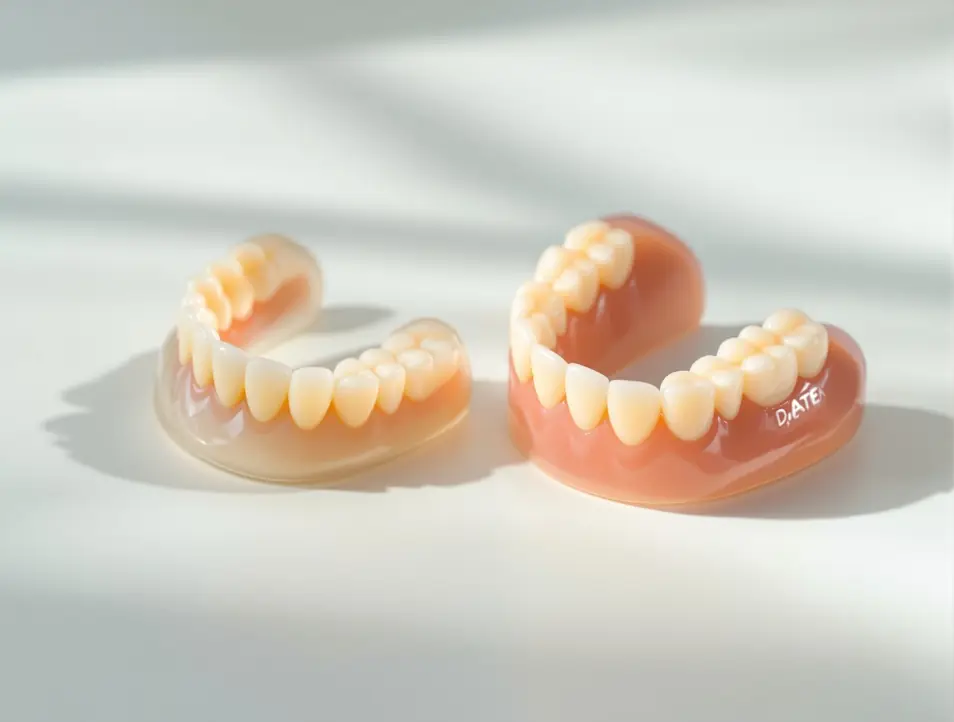
You can think of Scottsdale dentures as removable replacements for your missing teeth. They sit just above your gums and are molded to look and feel like your natural teeth. Because you can remove them, you won't have to worry about discomfort when you go to bed.
Not only are dentures more cost-effective compared to permanent solutions like implants, but they're also comfortable, easy to maintain, and can replace one or several missing teeth.
Partial Dentures for Filling Gaps
What if you don't have rows of missing teeth, but just one or two? Partial dentures serve as replacements for missing teeth and stabilize the ones you already have.
Cast Metal Partial
Metal-framed partials use a biocompatible alloy that provides excellent strength and longevity while remaining thin and unobtrusive. Generally the most durable option and recommended when long-term stability is the priority.
Flexible Resin Partial
Thermoplastic nylon partials eliminate visible metal clasps. The clasps are tooth-colored or gum-colored, blending naturally. They weigh less than metal-framed alternatives and are preferred by patients with metal sensitivities.
Precision Attachment Partial
Replace visible clasps with interlocking components for the most aesthetic result. A crown on the anchor tooth locks with part built into the partial. When inserted, the two pieces click together for secure retention without visible hardware.
Full Dentures for Complete Arch Replacement
If you're missing multiple teeth in one area, full dentures are the right dental solution for you. The type that fits you best depends on your timeline, bone structure, and how much stability you need.
Immediate Dentures
Fabricated before your extractions and placed the same day remaining teeth are removed. You leave with a complete smile, but the fit will need adjustments as gums heal over the following months.
Conventional Full Dentures
Fabricated after extraction sites fully heal (typically 6–8 weeks). Because the denture is built on stable, healed anatomy, it fits more precisely from the start and requires fewer adjustments.
Overdentures
If you have a few remaining structurally sound roots, the denture rests over them. This distributes chewing forces more evenly, provides greater stability, and slows bone resorption in those areas.
Implant-Supported
For the closest experience to natural teeth. Titanium posts are placed in the jawbone and the denture snaps onto them using specialized attachments, staying firmly in place during eating and speaking.
The Problems With Missing Teeth
Chewing Challenges
Gaps in your bite make chewing significantly harder. You might avoid nutritious fibrous foods and lean proteins because remaining teeth cannot manage the work.
Difficulties With Speaking
Teeth serve a phonetic function, meaning you need them to pronounce certain sounds. Any missing teeth can prevent you from saying many words clearly.
Structural Bone Loss
When tooth roots no longer stimulate the jawbone, the bone begins to resorb — causing a sunken facial appearance, shortened lower face, and prematurely aged look.
Psychological Impact
Many patients pull back from social situations, laugh less freely, or hold back in professional interactions because they feel self-conscious about their smile.
Daily Denture Care
Dentures can often last for up to five years, but you can stretch the longevity by as much as a decade if you follow these habits:
How We Craft Full and Partial Dentures
The Scottsdale Dental Aesthetics Process — thorough from start to finish.
Evaluation & Preparation
Comprehensive dental exam with digital radiography assesses bone structure, gum tissue quality, and underlying conditions. Preparatory work includes extractions of unsavable teeth, gum disease treatment, and minor oral surgery to improve tissue contours.
Impressions & Bite Registration
Two impressions are taken. Initial impressions capture general anatomy; the second set uses custom trays and precision materials to record exact gum tissue contours. Bite registration ensures proper jaw alignment to prevent headaches and prosthetic wear.
Aesthetics & Material Selection
Artificial teeth come in dozens of shades, shapes, and sizes. During your try-in, we select teeth that complement your facial features, skin tone, and preferences. Choose from acrylic teeth (easier to adjust) or porcelain teeth (superior stain resistance).
The Try-In
Before finalizing, you try a wax mock-up showing exactly how the finished prosthetic will look and function. This is your opportunity to evaluate tooth shade, shape, and positioning. Once you approve, the laboratory completes fabrication.
Final Delivery
At delivery, we verify fit and comfort before you leave our Scottsdale office. Minor adjustments are common during the first few weeks as your mouth adapts to your new dentures.
Follow-Up Care
You might need two to four brief adjustment visits in the first month. We remain available for relining, repairs, and ongoing care to keep your prosthetics fitting correctly for years to come.
Adapting to Your New Dentures
After you've received your dentures, it's normal for them to feel odd at first. Full adjustment takes time, but you'll get used to them after a week or so. Here's what to expect:
Increased saliva
Your mouth responds to the new appliance as if it were food. This reaction typically resolves within a few days.
Mild temporary soreness
Mild sore spots can develop. Wear your denture for about 24 hours before coming in for adjustment, so we can identify the exact pressure point.
Temporary speaking changes
It's normal for speech to be challenging at first. Any difficulties will subside after a few days to a week.
Eating differently for a while
Start with soft foods cut into small pieces. Chew on both sides simultaneously, and avoid sticky or hard foods.

Dentures FAQs
Related treatments
Written by the Scottsdale Dental Aesthetics team. Treatment is provided by Dr. Omar Karaboulad, DMD and Dr. Richard Alverson, DDS.
Last updated . This page is general information, not a diagnosis. Call (480) 991-3244 to ask about your own situation.
Coming from Paradise Valley, North Scottsdale or nearby? See distances and directions.