
Dental Bridges
in Scottsdale
Modern dentistry brings several ways to replace missing teeth, including dentures and implants. If you are seeking an affordable, non-invasive, long-term solution, consider dental bridges. At Scottsdale Dental Aesthetics, Dr. Omar Karaboulad, DMD, is close by, always ready to craft your new smile.

The short answer
A bridge fills the gap left by one or more missing teeth with a false tooth held in place by crowns on the teeth on each side, or by implants. It is usually quicker than an implant. The trade-off is that the neighboring teeth have to be reshaped, and a bridge does not preserve the bone under the gap.
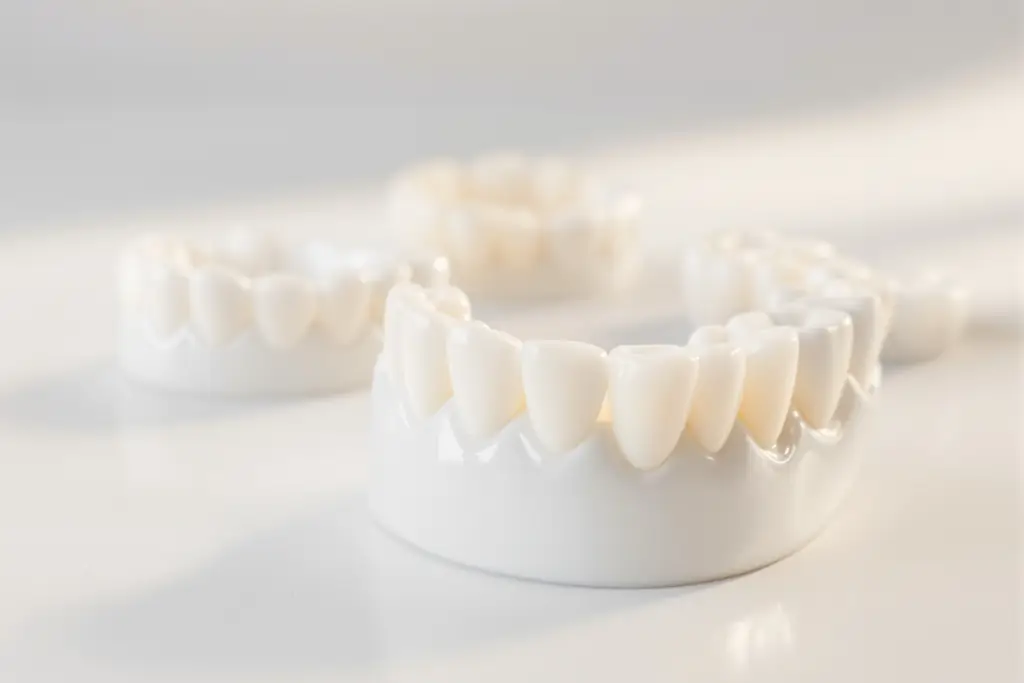
Dental Bridges in Scottsdale AZ
Missing even just a tooth already brings many troubles. If it is in the front, you hesitate to smile and feel self-conscious when you speak. If it is in the back, you find it hard to chew your food.
Are you going to deal with those gaps forever? You do not have to! At Scottsdale Dental Aesthetics in Scottsdale, Arizona, Dr. Omar Karaboulad, DMD, is close by, always ready to craft your new smile.
A dental bridge is an appliance that bridges the gap that a missing tooth or missing teeth leave. It is not removable, and two things hold it in place: Abutments (anchors that can be your natural teeth or small connector posts) and Pontics (replacements that fill empty spaces to complete your smile again and restore your bite).
Restorative Dentistry
Types of Dental Bridges
There is not just one dental bridge. That means dentists can tailor treatments to what works best for every patient.
Traditional
A traditional bridge is the most common type and uses crowns on both sides of the gap, with the artificial tooth or teeth in between. This option works for patients with healthy teeth for reshaping on both sides of the missing tooth.
Cantilever
Instead of being supported on both sides, a cantilever bridge is anchored on just one side. The replacement tooth extends across the gap from a single supporting tooth, which works if you only have one natural tooth next to the space.
Maryland
Maryland bridges, also called resin-bonded bridges, use small metal "wings" instead of crowns. The wings attach to the backs of your neighboring teeth without needing as much alteration to your real teeth.
Implant-Supported
If you are missing several teeth in a row, implant-supported bridges provide extra support and durability. Small posts are surgically placed into your jawbone, fusing via osseointegration before the bridge is attached.

Why Choose Bridges
The Benefits of a Bridge
Why do many patients choose bridges over other tooth replacement alternatives? Here are three main reasons.
Look, Feel, and Function
An experienced dentist matches the color and size of the bridge to your existing teeth. Beyond appearance, they make eating and speaking feel easier and more natural. A bridge also prevents remaining teeth from shifting and helps prevent bone loss.
Manageable Maintenance
You take care of a bridge the same way you take care of your real teeth. Simply brush and floss at least twice a day. Since it is a familiar routine, it will be much easier to maintain oral care.
Affordable Tooth Replacement
They cost more than removable dentures, but they are more budget-friendly than implants. The appliances strike the perfect balance between price and long-term results.
Frequently Asked Questions
Dental bridge procedures are life-changing. Here are our expert answers to the most common questions.
Related treatments
Written by the Scottsdale Dental Aesthetics team. Treatment is provided by Dr. Omar Karaboulad, DMD and Dr. Richard Alverson, DDS.
Last updated . This page is general information, not a diagnosis. Call (480) 991-3244 to ask about your own situation.
Coming from Paradise Valley, North Scottsdale or nearby? See distances and directions.